3D printed RC aircraft · Revision 0.2.0 · Bench review
Raven Perch
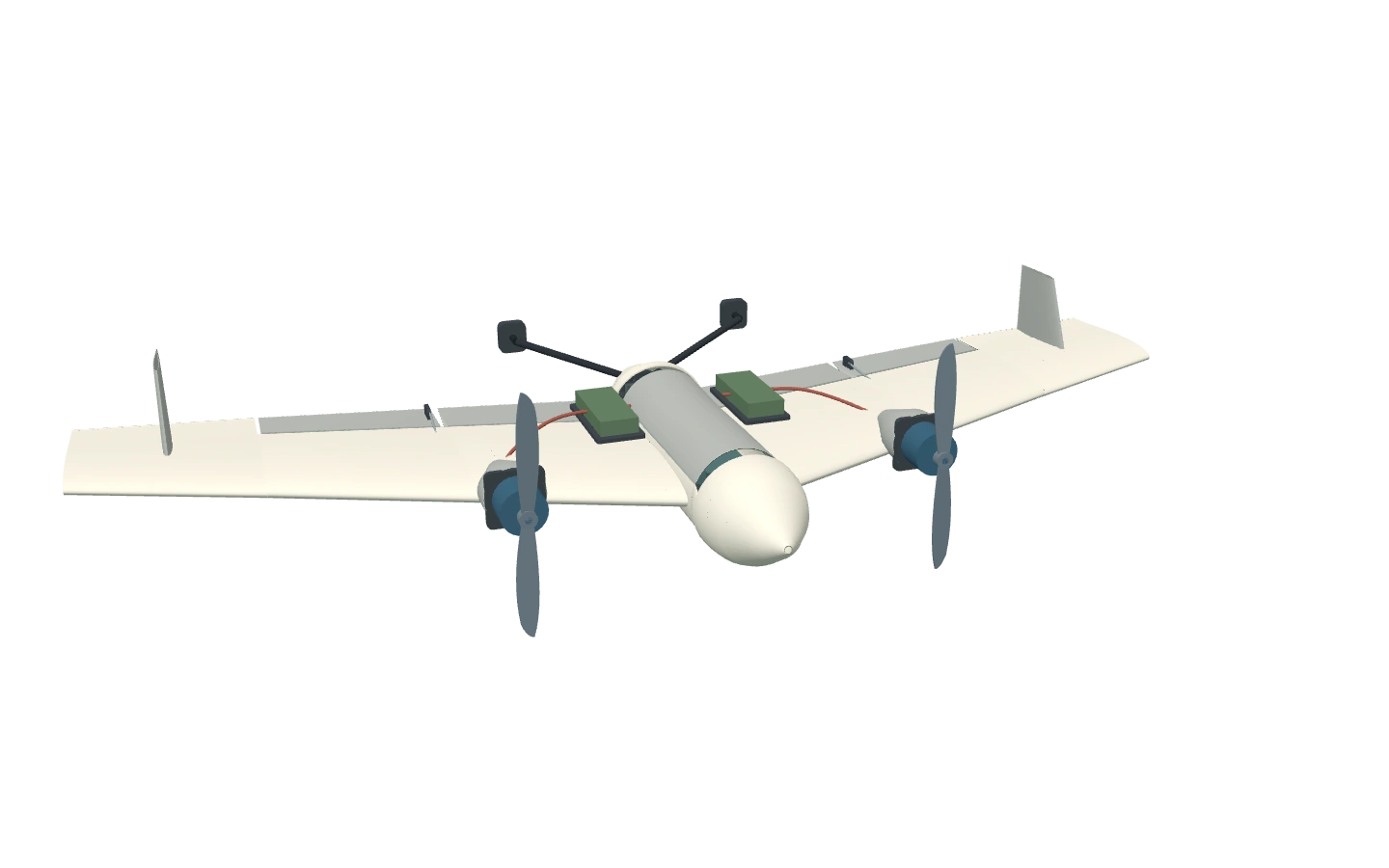
A flying-wing tailsitter with twin forward propellers, a removable nose and a four-point landing cradle.
- Wingspan
- 900 mm
- Wing section
- Provisional reflexed section
- Configuration
- Twin-motor tailsitter
Illustrated guide, bill of materials, STLs and Bambu Studio projects in one ZIP.
···
Swipe vertically to scroll. Use two fingers to turn the model and pinch to zoom.
Drag or use arrow keys to turn. Shift and arrows pan, + and − zoom, and Home resets.
Exploded view inventory0.2.0
- Airframe
- The split airframe, carbon structure and removable landing cradle.
- Fasteners and linkages
- Wing-root catches, hook bars, cams, rear cradle bridge bolts and motor screw locations.
- Electronics and wiring
- Twin motors and props, ESCs, battery, flight controller, receiver, GNSS, servos and schematic harness routing.
- Items to check in the build guide
- Check root retention, battery restraints and propeller retainers. Use the bill of materials for the airspeed kit, peripheral regulator, power distribution, connector restraints and service leads.
A tailsitter with a removable landing cradle
- Airframe
- Rails guide the removable nose and aft landing cradle. A bolted aft bridge transfers cradle loads to the module’s rails. Remove the hatch to reach the hook-and-cam releases.
- How it’s controlled
- ArduPilot Plane dual-motor tail-sitter with differential throttle and mixed elevons. The propellers point forward in cruise. The whole airframe pitches for hover and transition. The exact wiring and thrust limits are subject to installed checks.
- Who it’s for
- For RC builders studying tailsitter controls, landing geometry and the hook-and-lever fuselage interface on the bench.
- Flight targets
- No range, speed or altitude targets are published for this revision.
Physical checks are pending for print fit, retention, installed power, mass and balance, hover, both transitions, and landing.
Print files
The member build kit contains the listed STLs and print setup. Start with the joint coupons and record the measured fit before selecting an interface for the bench assembly.
Print setup
- Bambu Lab P1S with a 0.4 mm nozzle. Start with the saved 0.15, 0.25 and 0.35 mm clearance coupon projects. The coupon profiles use Generic PETG on textured PEI at 0.20 mm layers, four walls and 30% gyroid. The 4 editable airframe plates were checked with Bambu Studio 02.09.01.70. Verify material, bed, supports and orientation on your own printer. Record the physical print, fit, retention, mass and balance before applying power.
View the 57 printed parts
Images show the exported meshes for this revision. Each part is shown at its own scale.
| Part and STL filename | Image | Quantity | Material |
|---|---|---|---|
port wing panel 1parts/airframe/port-wing-1.stl | 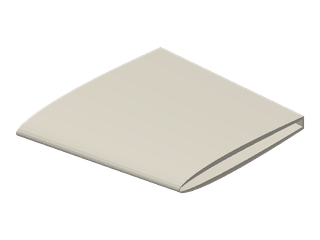 | 1 | LW-PLA candidate |
port elevon 1parts/airframe/port-elevon-1.stl | 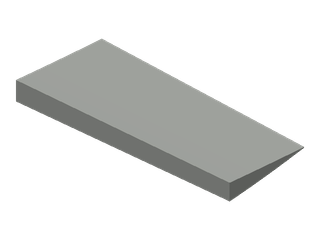 | 1 | LW-PLA candidate |
port wing panel 2parts/airframe/port-wing-2.stl | 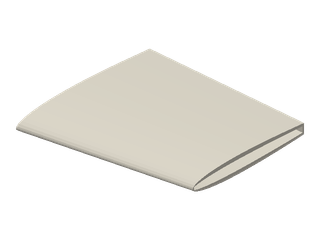 | 1 | LW-PLA candidate |
port elevon 2parts/airframe/port-elevon-2.stl | 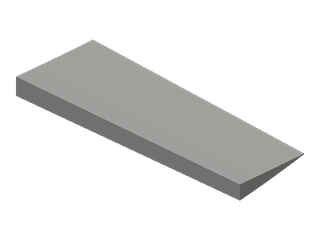 | 1 | LW-PLA candidate |
port wing panel 3parts/airframe/port-wing-3.stl | 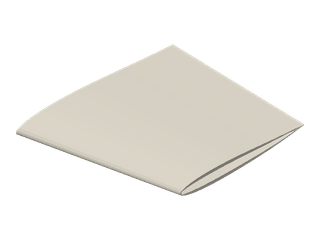 | 1 | LW-PLA candidate |
port ESC elevated bench deckparts/airframe/port-esc-deck.stl | 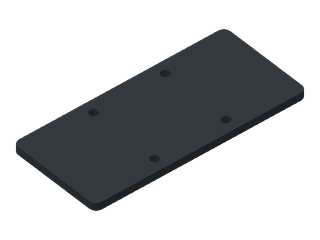 | 1 | PETG candidate |
port motor firewallparts/airframe/port-motor-firewall.stl | 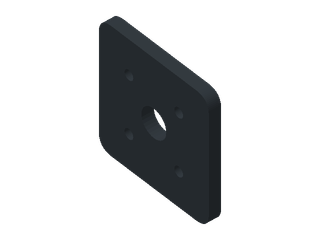 | 1 | PETG candidate |
port removable motor nacelle shellparts/airframe/port-nacelle-shell.stl | 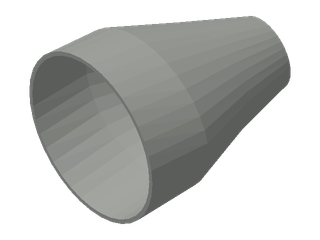 | 1 | LW-PLA candidate |
port vertical finparts/airframe/port-fin.stl | 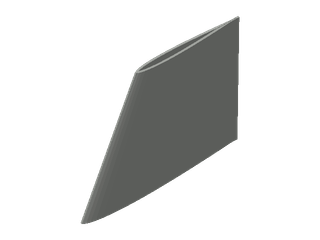 | 1 | LW-PLA candidate |
port servo trayparts/airframe/port-servo-tray.stl | 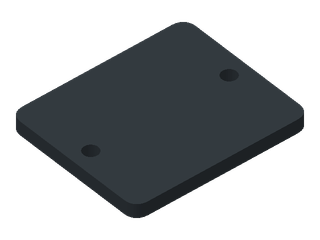 | 1 | PETG candidate |
port elevon horn templateparts/airframe/port-elevon-horn.stl | 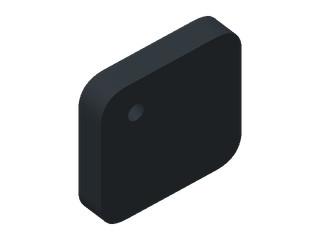 | 1 | PETG candidate |
starboard wing panel 1parts/airframe/starboard-wing-1.stl | 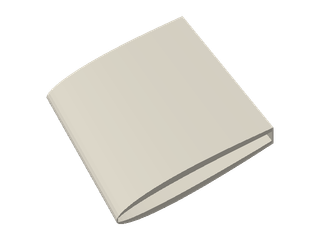 | 1 | LW-PLA candidate |
starboard elevon 1parts/airframe/starboard-elevon-1.stl | 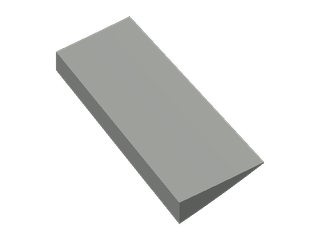 | 1 | LW-PLA candidate |
starboard wing panel 2parts/airframe/starboard-wing-2.stl | 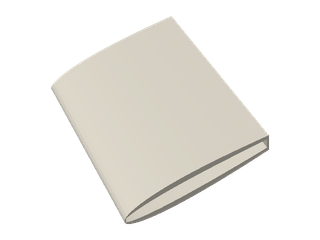 | 1 | LW-PLA candidate |
starboard elevon 2parts/airframe/starboard-elevon-2.stl | 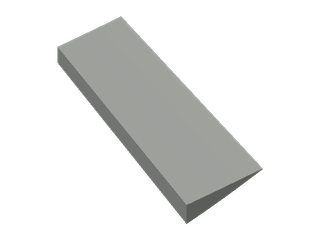 | 1 | LW-PLA candidate |
starboard wing panel 3parts/airframe/starboard-wing-3.stl | 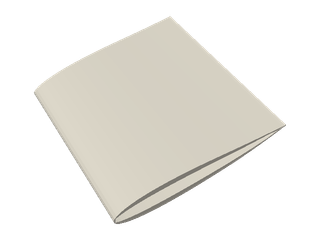 | 1 | LW-PLA candidate |
starboard ESC elevated bench deckparts/airframe/starboard-esc-deck.stl | 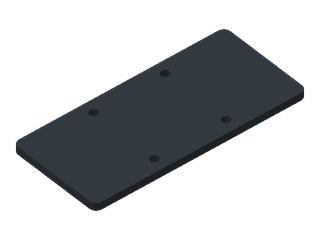 | 1 | PETG candidate |
starboard motor firewallparts/airframe/starboard-motor-firewall.stl | 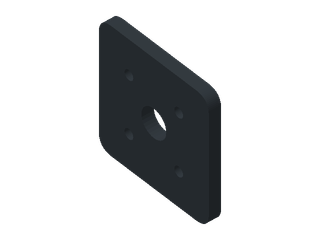 | 1 | PETG candidate |
starboard removable motor nacelle shellparts/airframe/starboard-nacelle-shell.stl | 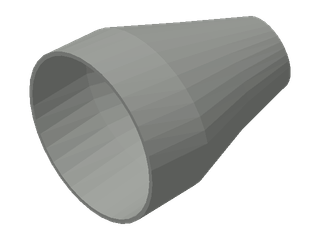 | 1 | LW-PLA candidate |
starboard vertical finparts/airframe/starboard-fin.stl | 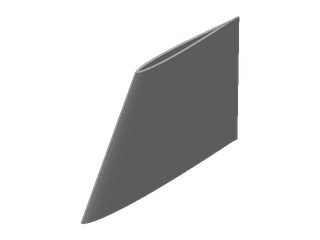 | 1 | LW-PLA candidate |
starboard servo trayparts/airframe/starboard-servo-tray.stl | 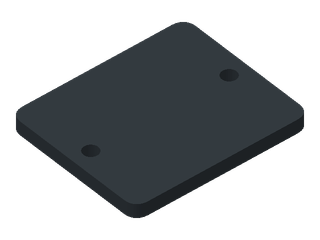 | 1 | PETG candidate |
starboard elevon horn templateparts/airframe/starboard-elevon-horn.stl | 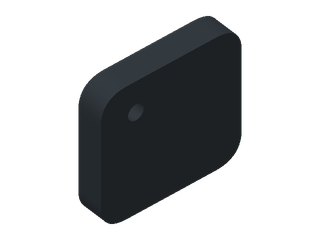 | 1 | PETG candidate |
port upper replaceable landing padparts/airframe/port-upper-landing-pad.stl | 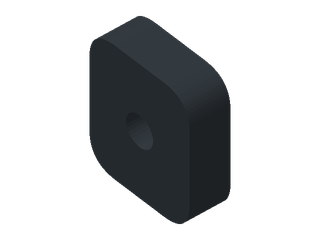 | 1 | PETG candidate |
port lower replaceable landing padparts/airframe/port-lower-landing-pad.stl | 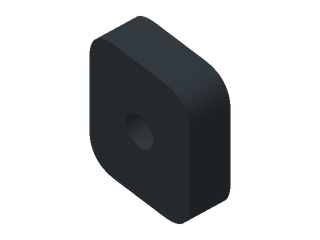 | 1 | PETG candidate |
starboard upper replaceable landing padparts/airframe/starboard-upper-landing-pad.stl | 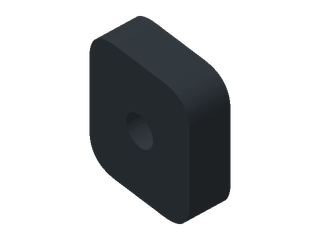 | 1 | PETG candidate |
starboard lower replaceable landing padparts/airframe/starboard-lower-landing-pad.stl | 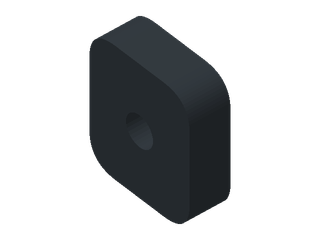 | 1 | PETG candidate |
Removable nose shellparts/airframe/nose-shell.stl | 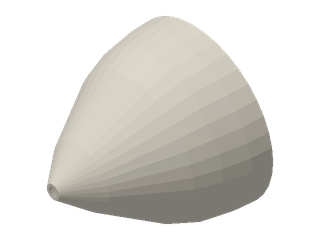 | 1 | LW-PLA candidate |
Center shell front seat ringparts/airframe/center-shell-front-ring.stl | 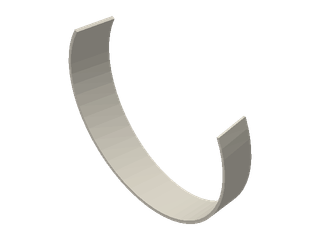 | 1 | LW-PLA candidate |
Center shell rear seat ringparts/airframe/center-shell-rear-ring.stl | 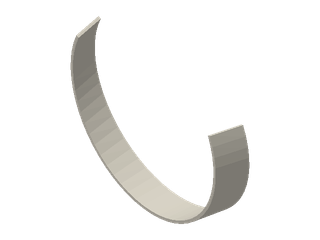 | 1 | LW-PLA candidate |
Open-top center shell with two wing spar clearance portsparts/airframe/center-shell.stl | 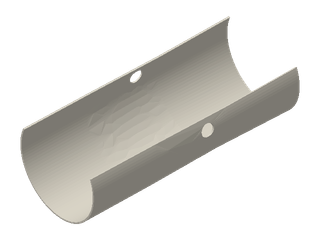 | 1 | LW-PLA candidate |
Removable center service coverparts/airframe/center-hatch.stl | 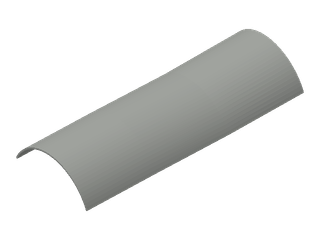 | 1 | LW-PLA candidate |
Removable aft shell with four cradle strut clearance portsparts/airframe/aft-shell.stl | 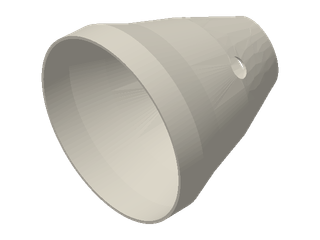 | 1 | LW-PLA candidate |
nose port rail socket and face-bond shoeparts/airframe/nose-rail-shoe-port.stl | 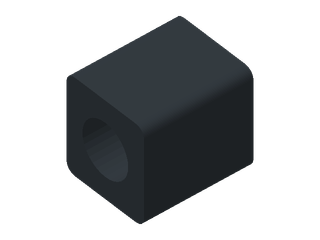 | 1 | PETG candidate |
center-nose port rail socket and face-bond shoeparts/airframe/center-nose-rail-shoe-port.stl | 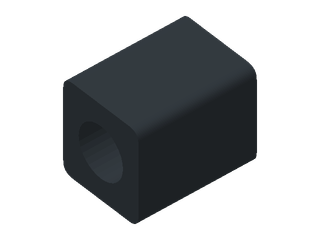 | 1 | PETG candidate |
center-aft port rail socket and face-bond shoeparts/airframe/center-aft-rail-shoe-port.stl | 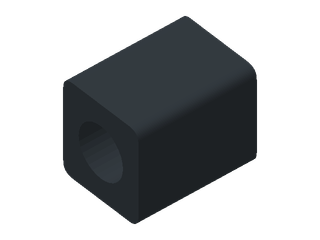 | 1 | PETG candidate |
aft port rail socket and face-bond shoeparts/airframe/aft-rail-shoe-port.stl | 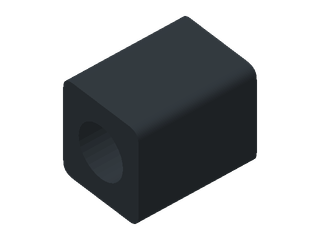 | 1 | PETG candidate |
nose starboard rail socket and face-bond shoeparts/airframe/nose-rail-shoe-starboard.stl | 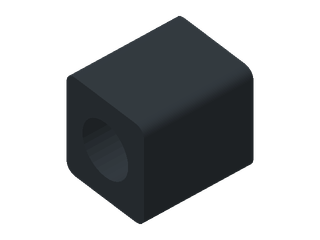 | 1 | PETG candidate |
center-nose starboard rail socket and face-bond shoeparts/airframe/center-nose-rail-shoe-starboard.stl | 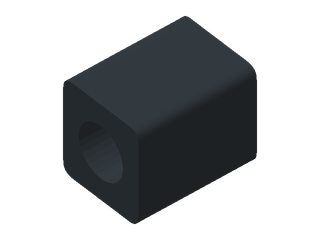 | 1 | PETG candidate |
center-aft starboard rail socket and face-bond shoeparts/airframe/center-aft-rail-shoe-starboard.stl | 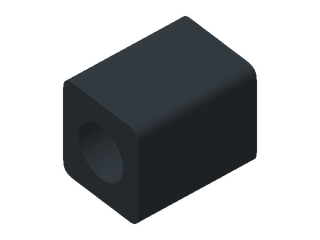 | 1 | PETG candidate |
aft starboard rail socket and face-bond shoeparts/airframe/aft-rail-shoe-starboard.stl | 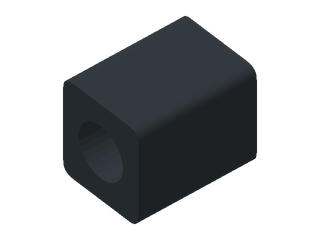 | 1 | PETG candidate |
Removable battery strap tray with rail-saddle seatsparts/airframe/battery-tray.stl | 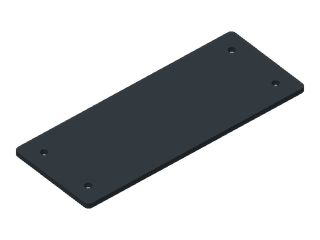 | 1 | PETG candidate |
Avionics deck with rail and aft receiver clearanceparts/airframe/avionics-deck.stl | 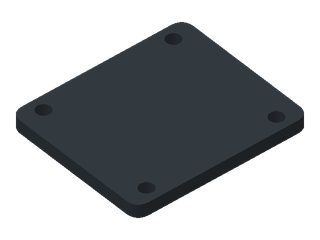 | 1 | PETG candidate |
front port battery-tray rail saddleparts/airframe/battery-rail-saddle-front-port.stl | 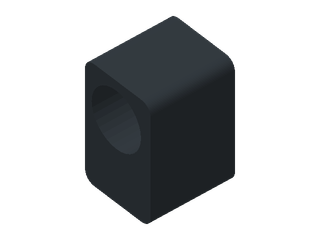 | 1 | PETG candidate |
front starboard battery-tray rail saddleparts/airframe/battery-rail-saddle-front-starboard.stl | 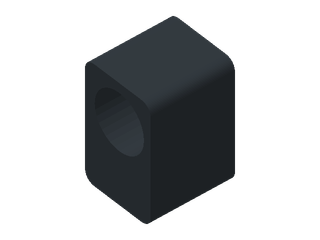 | 1 | PETG candidate |
aft port battery-tray rail saddleparts/airframe/battery-rail-saddle-aft-port.stl | 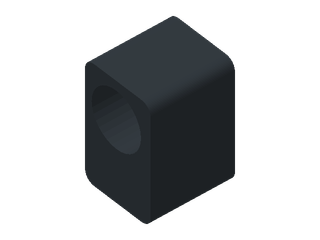 | 1 | PETG candidate |
aft starboard battery-tray rail saddleparts/airframe/battery-rail-saddle-aft-starboard.stl | 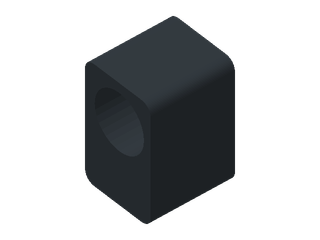 | 1 | PETG candidate |
Aft rail transfer web with two cradle bolt boresparts/airframe/aft-rail-transfer-web.stl | 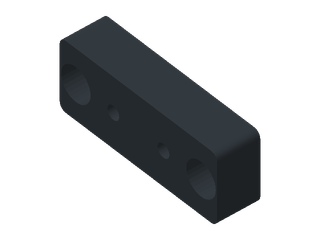 | 1 | PETG candidate |
Aft cradle hub with four angled stock pockets and two transfer bolt boresparts/airframe/landing-cradle-hub.stl | 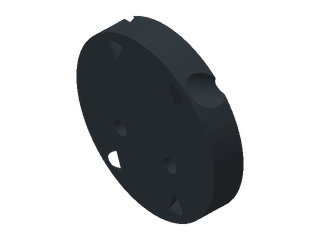 | 1 | PETG candidate |
Spigotparts/coupons/perch-c15-spigot.stl | 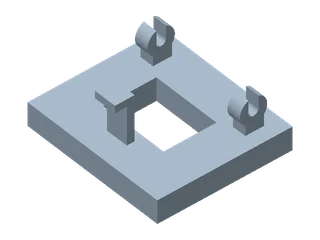 | 1 | PETG candidate |
Receiverparts/coupons/perch-c15-receiver.stl | 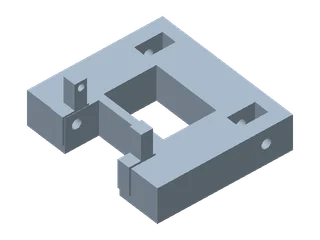 | 1 | PETG candidate |
Camparts/coupons/perch-c15-cam.stl | 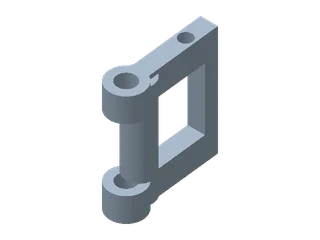 | 1 | PETG candidate |
Spigotparts/coupons/perch-c25-spigot.stl | 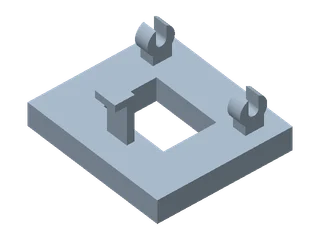 | 1 | PETG candidate |
Receiverparts/coupons/perch-c25-receiver.stl | 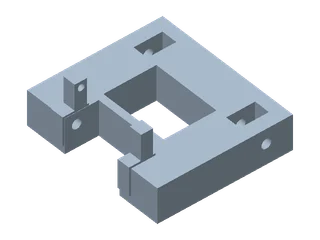 | 1 | PETG candidate |
Camparts/coupons/perch-c25-cam.stl | 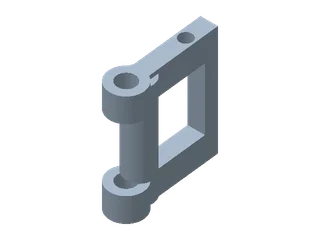 | 1 | PETG candidate |
Spigotparts/coupons/perch-c35-spigot.stl | 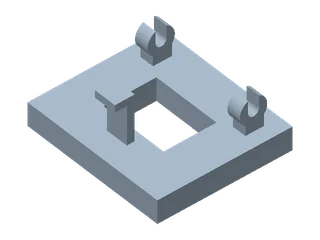 | 1 | PETG candidate |
Receiverparts/coupons/perch-c35-receiver.stl | 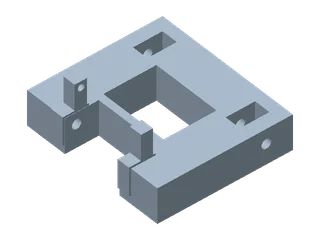 | 1 | PETG candidate |
Camparts/coupons/perch-c35-cam.stl | 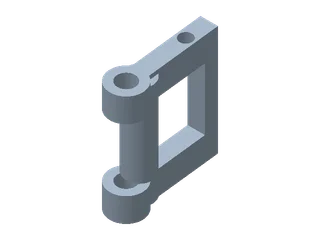 | 1 | PETG candidate |
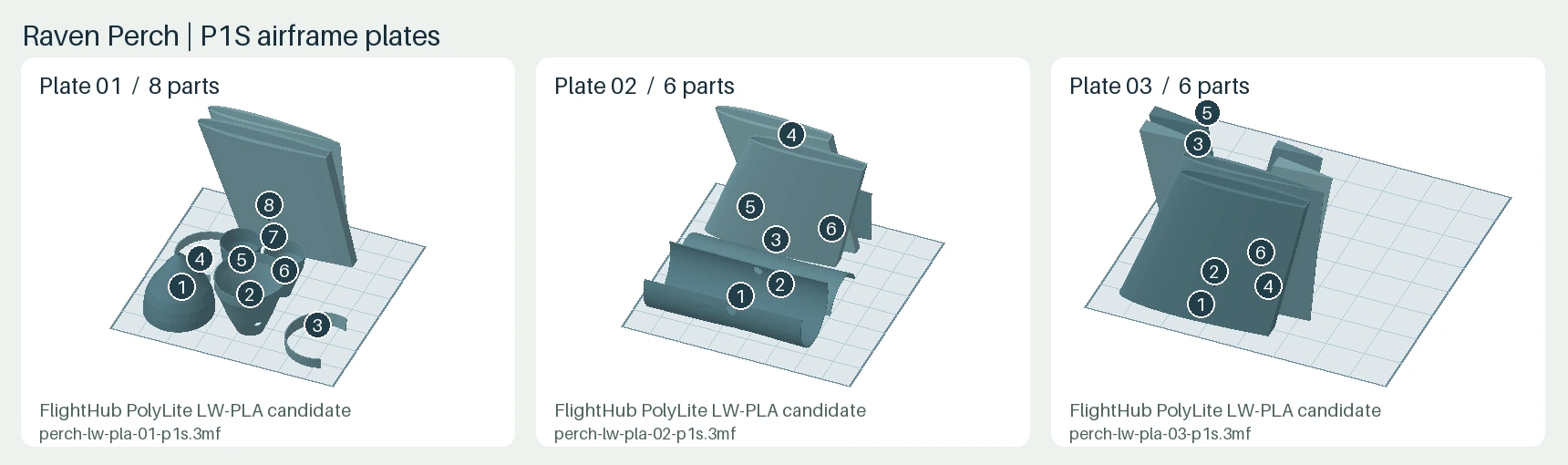
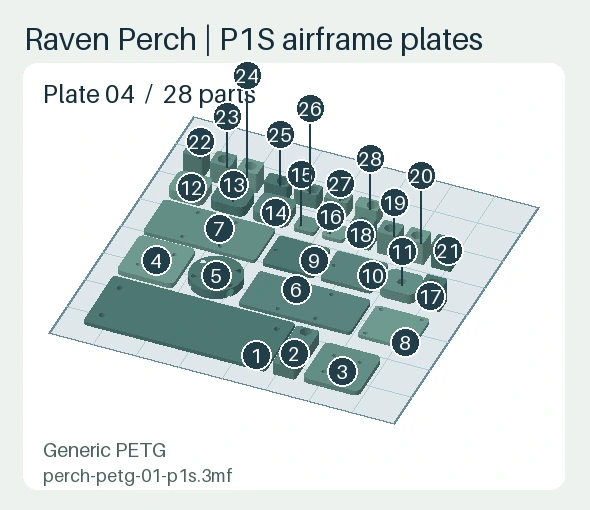
P1S plate setup and orientation
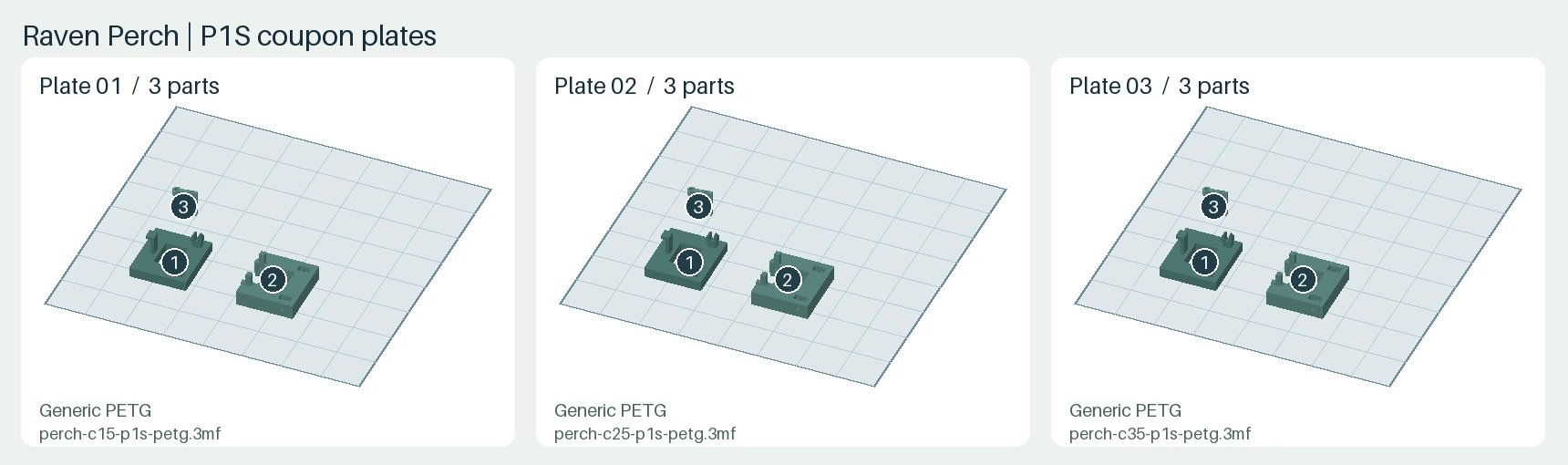
Bambu Studio 02.09.01.70 sliced 4 airframe plates with 2,307 total layers. Estimated filament use is 683.8 g across the airframe plates, including supports and brims. The 3 fit-coupon projects are separate.
All airframe and coupon plates completed without plate warnings.
View the verified P1S plate layouts
Workshop tools
Use your existing workshop equipment where suitable. The reference printer and these tools are budgeted separately.
- Bambu Lab P1S with 0.4 mm nozzle: Use documented plate and profiles, calipers and a spring scale for fit coupons. bench equipment Reference for Bambu Lab P1S with 0.4 mm nozzle
- Propulsion and electrical measurement kit: Multimeter, current-limited supply, calibrated wattmeter, scale, tachometer, thermometer, remote cutoff and rated restrained thrust fixture. bench equipment
Bill of materials
Aircraft parts, assembly supplies, and radio and charging gear for revision 0.2.0.
Printed-part images show the exported meshes. Hardware and supply drawings help identify items. Images are not to scale.
Download BOM (CSV)Scroll each table sideways to see specifications and supplier links.
Printed parts and filament10 items
| Item | Image | Qty | Price (USD) and stock | Specification & sourcing |
|---|---|---|---|---|
| Perch hook and draw-lever fit coupons | Nominal c25 spigot | 1 set | Print from the kit | Start with matched 0.15 / 0.25 / 0.35 mm nominal clearances. Inspect both hooks, lever sweep, hard-stop seating and catch insertion. print first |
| Nose and center fuselage modules | Removable nose shell | 1 set | Print from the kit | Keyed front joint, retained battery hatch and center equipment access. Exact IDs and quantities are in the print manifest. prototype CAD |
| Aft landing cradle and snap interfaces | Removable aft shell with four cradle strut clearance ports | 1 assembly | Print from the kit | Four-point nose-up stance. Capture both hooks with a metal bar, close the draw lever and engage the secondary catch. Record elevon clearance. prototype CAD |
| Left and right wings and elevons | port wing panel 1 | 1 set | Print from the kit | Original 900 mm nominal swept wing with separately driven elevons. Keep elevons behind the motors in their wash. prototype CAD |
| Motor and servo adapters plus equipment supports | port motor firewall | 1 set | Print from the kit | Fit 19 × 19 mm M3 motors and HS-65MG case envelopes. Isolate hot items from thin skins and route wires away from moving surfaces. prototype CAD |
| Lightweight shell filament | 1 lot | $21.09 562.591 g at $0.037/g $29.99 / 800 g spool In stock Recheck stock · In stock at last check | LW-PLA class candidate. Select exact product and profile from shell weight, deformation and layer strength evidence. material pending In-stock PA08003 gray PolyLite LW-PLA, 1.75 mm × 0.8 kg. Material profile remains a candidate. | |
| Rigid airframe filament (PETG) | 1 lot | $2.30 121.228 g at $0.019/g $18.99 / 1000 g spool In stock Recheck stock · In stock at last check | Use the saved Generic PETG airframe projects as the process reference. Choose and record the actual PETG spool. The three fit coupon projects have separate material estimates. material candidate Black 1.75 mm PETG HF with 1 kg spool, SKU G02-K0-1.75-1000-SPL. GigaParts marks it in stock. | |
| Module-local bonded rail shoes | nose port rail socket and face-bond shoe | 8 | Print from the kit | Two nose, four center and two aft printed shoes. Trial-fit each part with the specified successor geometry. The 0.25 mm modeled face bond still needs material and load verification. Successor bench CAD |
| Aft rail-to-hub bridge and hub | Aft cradle hub with four angled stock pockets and two transfer bolt bores | 1 set | Print from the kit | Revised bridge and four angled 6.3 mm nominal landing-stock pockets. The aft shell's four 8.2 mm ports provide clearance. Check bore alignment and loads with the actual cradle. Successor bench CAD |
| Battery rail saddles | front port battery-tray rail saddle | 4 | Print from the kit | Keep the restrained battery and saddles on the center module. Check actual lead bends, receiver clearance and service access through both cam sweeps. Successor bench CAD |
Propulsion and onboard electronics12 items
| Item | Image | Qty | Price (USD) and stock | Specification & sourcing |
|---|---|---|---|---|
| EMAX ECO II 2807 1700KV motor | 2 | $19.49 / motor 2 × $19.49 = $38.98 In stock Recheck stock · In stock at last check | ECO228071700. 19 × 19 mm M3, M5 prop nut, 18 AWG 200 mm leads. Measure case and motor screw depth. sourced candidate The EMAX USA 1700 KV selection is ECO228071700. The listing showed 83 available, covering the two required motors. | |
| Gemfan Flash 7042 two-blade matched props | 1 pack | $4.99 / 4-pack In stock Recheck stock · In stock at last check | 177.8 mm nominal diameter, 5 mm bore, 7.5 mm hub, 2 CW + 2 CCW. Fit one of each and verify hand and retention. sourced candidate The selected black variant E5-5882-1819 is in stock. The pack includes two CW and two CCW propellers with 5 mm bores. | |
| Hobbywing Skywalker 60A V2 ESC | 2 | $34.99 / ESC 2 × $34.99 = $69.98 In stock Recheck stock · In stock at last check | V2 part 30216101. 3–6S, 60 A vendor continuous, 73 × 30 × 12 mm, 68 g. Use PWM and isolate both ESC BEC positive wires. sourced candidate HeliDirect lists SKU 30216101 in stock and publishes an inventory quantity of two, matching the build quantity. | |
| Tattu 4S 2300 mAh XT60 LiPo | 1 | $37.09 / battery In stock Recheck stock · In stock at last check | TA-75C-2300-4S1P-XT60. 14.8 V nominal, 105 × 35 × 29 mm nominal, 270 g nominal. Confirm installed fit and discharge envelope. restrained bench candidate The GensTattu US listing confirms TA-75C-2300-4S1P-XT60, retail SKU TAA23004S75X6, and stock on hand. | |
| Main disconnect and two-branch power harness | 1 set | Source to choose | Select exact protection, contacts, wire gauges and branch limits by measured current and thermal rise. Installed unrestricted output is held. release blocked Select the protection, contacts and wire gauges after measuring installed current and temperature. | |
| SpeedyBee F405 WING MINI V1.2 | 1 | $79.99 / controller kit In stock Recheck stock · In stock at last check | 37 × 26 × 14 mm nominal, 5.2 V/2 A FC and 5 V/4 A servo rail. Four PWM outputs, UART1 CRSF, UART3 GNSS, I²C compass. sourced candidate SoarSky variant 52092143042845 lists nine kits in stock and matches the controller, power board and USB extender in SpeedyBee's V1.2 user manual. | |
| Hitec HS-65MG metal-gear servo | 2 | $35.99 / servo 2 × $35.99 = $71.98 In stock Recheck stock · In stock at last check | 23.6 × 11.6 × 24 mm case. Use 5 V analog PWM and confirm servo torque reserve and travel with actual linkages. sourced candidate Horizon Hobby showed 61 of HRC32065S in stock, covering the required pair. | |
| RadioMaster RP3 V2 ELRS receiver | 1 | $19.99 / receiver In stock Recheck stock · In stock at last check | 2.4 GHz, 5 V, CRSF. 22 × 13 × 4 mm body and two antennas. sourced candidate RadioMaster marks the selected US FCC SKU HP0157.RX-RP3-V2 in stock. | |
| Holybro Micro M10 GNSS and compass | 1 | $46.89 / cased GNSS module In stock Recheck stock · In stock at last check | 34 × 28 × 11 mm and 16 g with case, UART GNSS and I²C compass. Confirm delivered compass and header. sourced candidate The selected in-stock IST8310 variant has the case, the 34 × 28 × 11 mm envelope and the 16 g vendor weight. The seller publishes U.S. delivery terms. | |
| Pololu D24V22F5 peripheral regulator | 1 | $26.95 / regulator In stock Recheck stock · In stock at last check | Pololu #2858. Nominal 5 V for GNSS and receiver. Isolate the positive from both FC rails and verify loaded voltage. sourced candidate Pololu #2858 product offer shows USD price and in-stock availability. | |
| MicroSD and harness service leads | 1 set | Source to choose | ArduPilot-compatible log storage, USB data lead and keyed UART/I²C harness; check board and peripheral pinouts. source pending Select the storage, cable types and keyed harnesses for the boards and pinouts actually installed. | |
| Holybro MS4525DO and PT40 pitot | 1 set | $46.59 / sensor $7.99 / PT40 pitot In stock Recheck stock · In stock at last check | Transition instrumentation candidate. Review local airflow, hoses, electrical compatibility, stock and calibration. later test candidate The MS4525DO/PT40 bundle is out of stock. Holybro lists the separate sensor 19007 and PT40 32022 in stock. Optional transition instrumentation is outside the base estimate. |
Airframe stock and linkages4 items
| Item | Image | Qty | Price (USD) and stock | Specification & sourcing |
|---|---|---|---|---|
| Carbon spar and reinforcement stock | 1 set | $9.20 / 1 m tube $9.94 / 1 m landing-strut rod candidate In stock · Required quantity unconfirmed Recheck stock · In stock at last check | CAD uses 9 × 7 mm main and nacelle tubes and nominal 6 mm landing struts. The module-local fuselage rails have their own line below. Check fit and loads against the exact successor build. source pending Both nominal stock sizes are available. Confirm cut quantities and the landing strut material before pricing the full set. | |
| Hook bars and cam axle hardware | 2 sets | Source to choose | Each seam has one nominal 3 mm hook bar, two short nominal 3 mm pivot pins and one independent nominal 2 mm catch pin. Cut lengths and keeper specification require measured fit. source pending Trial fit determines the 3 mm bar and pivot lengths, 2 mm catch length and keeper parts. | |
| Elevon hinges horns and retained pushrods | 2 sets | Source to choose | Use positive hinge and linkage retention and control horns matched to the reviewed load and geometry. Final travel remains open. source pending Select the hinge, horn, linkage and positive retention to suit the measured assembly geometry and loads. | |
| Module-local carbon rail stocks | 6 | $7.82 / 1 m tube In stock Recheck stock · In stock at last check | Nominal 8 mm OD / 6 mm ID carbon stock. Per side: nose 18.75 mm, center 177.50 mm and aft 31.00 mm. The printed sockets are nominal 8.25 mm. Measure the actual fits. Stock and structural qualification pending An in-stock 8 mm OD × 6 mm ID pultruded tube. One metre covers the six specified cuts, which total 454.5 mm before cutting allowances. |
Fasteners and assembly supplies3 items
| Item | Image | Qty | Price (USD) and stock | Specification & sourcing |
|---|---|---|---|---|
| Motor screws and wing-root fasteners | 1 set | Source to choose | M3 motor mount screws with engagement sized from the actual firewall and motor. Select wing-root retention and locking hardware after physical fit. source pending Confirm the M3 screw grip and motor thread depth, and select the wing-root locking hardware after trial fit. | |
| Battery restraints pads and wire protection | 1 set | Source to choose | Padded strap with structural anchor and axial restraint, strain relief, abrasion guards and equipment-retention hardware. source pending Choose the strap, pads, wire guards and load-bearing anchors after dry fitting the actual pack and harness. | |
| Rear bridge M3 bolts, spacers and retention hardware | 2 sets | Source to choose | Two nominal 1.25 mm spacers sit in the rear bridge stack. Determine actual bolt grip and positive retention after dry fit and review touchdown loads. Sourced hardware fit pending Both bridge stacks need trial fit before selecting bolt grip and positive retainers. |
Radio and charging gear2 items
| Item | Image | Qty | Price (USD) and stock | Specification & sourcing |
|---|---|---|---|---|
| RadioMaster TX16S Mark II Mode 2 | 1 | $219.99 / radio In stock Recheck stock · In stock at last check | Choose the internal 2.4 GHz ELRS variant. Supply a compatible radio battery and confirm firmware and failsafe. sourced candidate The US FCC ELRS Hall-gimbal SKU HP0157.0020 is in stock. It requires a separate compatible radio battery. | |
| Gens ace iMars III Pro balance charger | 1 | $59.99 / charger Out of stock Recheck stock · Out of stock at last check | Use the supplied compatible charge and balance leads and the battery-maker instructions for standard 4S LiPo. sourced candidate GEA100WMPRO is currently out of stock here and at World of R/C Parts. Horizon Hobby lists the same SKU as discontinued. |
Build guide
Raven Perch 0.2.0 is the twin-tractor flying-wing tail-sitter with a removable nose and four-point landing cradle. Module-local rail stocks preserve the nose and cradle release paths. The hatch opens before access to either hook and cam. Check retention and loads on the exact physical bench article.
Bambu Lab P1S with a 0.4 mm nozzle. Start with the saved 0.15, 0.25 and 0.35 mm clearance coupon projects. The coupon profiles use Generic PETG on textured PEI at 0.20 mm layers, four walls and 30% gyroid. The 4 editable airframe plates were checked with Bambu Studio 02.09.01.70. Verify material, bed, supports and orientation on your own printer. Record the physical print, fit, retention, mass and balance before applying power. Review the print inventory and bill of materials before starting. Use the 3D assembly reference to find parts on the aircraft. The plate images show how parts sit on the printer bed.
Explore the assembly, exploded view and components in 3D
Open full-window 3D referenceCompare the assembled and exploded views alongside the guide. Select Wiring to inspect the candidate harness routes. Select Installed joint service to review the access and removal steps on the full airframe.
Connection checks
- Hook bars, cams and independent catches
- Start with the three clearance coupon pairs. With the lever open, seat both hooks over the bar, close the cam and insert its independent catch. Check full stop contact and deliberate release, then record seam play and retention after repeated cycles.
- Nose and landing-cradle release paths
- Remove both propellers, disconnect the battery and lift the center hatch before releasing either joint. Disconnect leads across the seam, remove its catch and open its cam before withdrawing the complete module. Confirm each rail stays with its own module and clear of the opening path.
- Landing cradle, bridge and rail shoes
- Check both bridge bolts and spacers, the bonded rail shoes, and each angled carbon strut pocket. The aft hub carries the landing loads through these attachments. Record actual engagement, four-foot level and nose-up stability before reviewing static and touchdown loads.
- Receiver and aft cam access
- Trial-fit the receiver and its restrained leads clear of the aft cam sweep. Keep the shortened avionics deck ahead of the receiver and check the shell clearance ports around both wing spars. Verify hatch removal and tool access with the actual harness installed.
- Wing roots, elevons and motor mounts
- Dry-fit the carbon main spar and root restraints and compare panel alignment and twist. With power disconnected, check motor fasteners and the full elevon linkage sweep in level and nose-up orientations, including clearance to both motor discs, the cradle and the work surface.
Print and measure the P1S fit coupons
- Why this matters
- The hook and cam need repeatable shoulder seating while the positive catch remains independently accessible.
- Where to look
- Match each hook and receiver pair on the P1S coupon sheets. Inspect cam and catch orientation before checking fit.
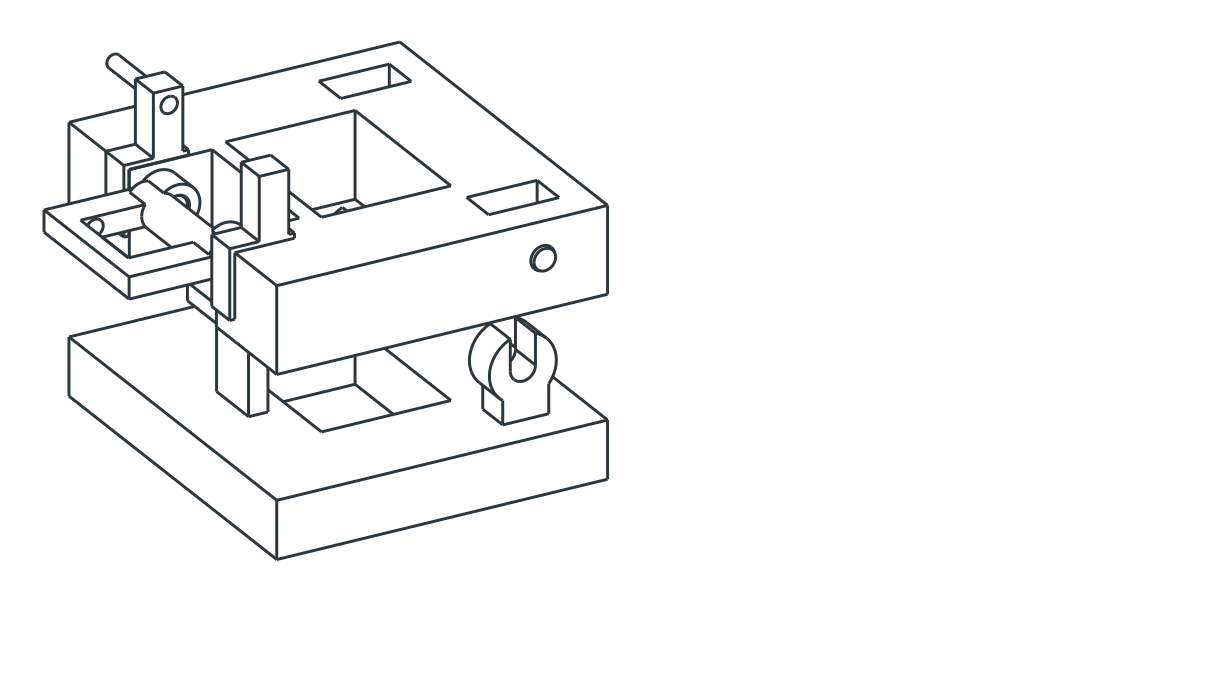
- Start with the 0.15, 0.25 and 0.35 mm Perch clearance variants. Print each mating set on the P1S with the 0.4 mm nozzle and record material lot, orientation and profile.
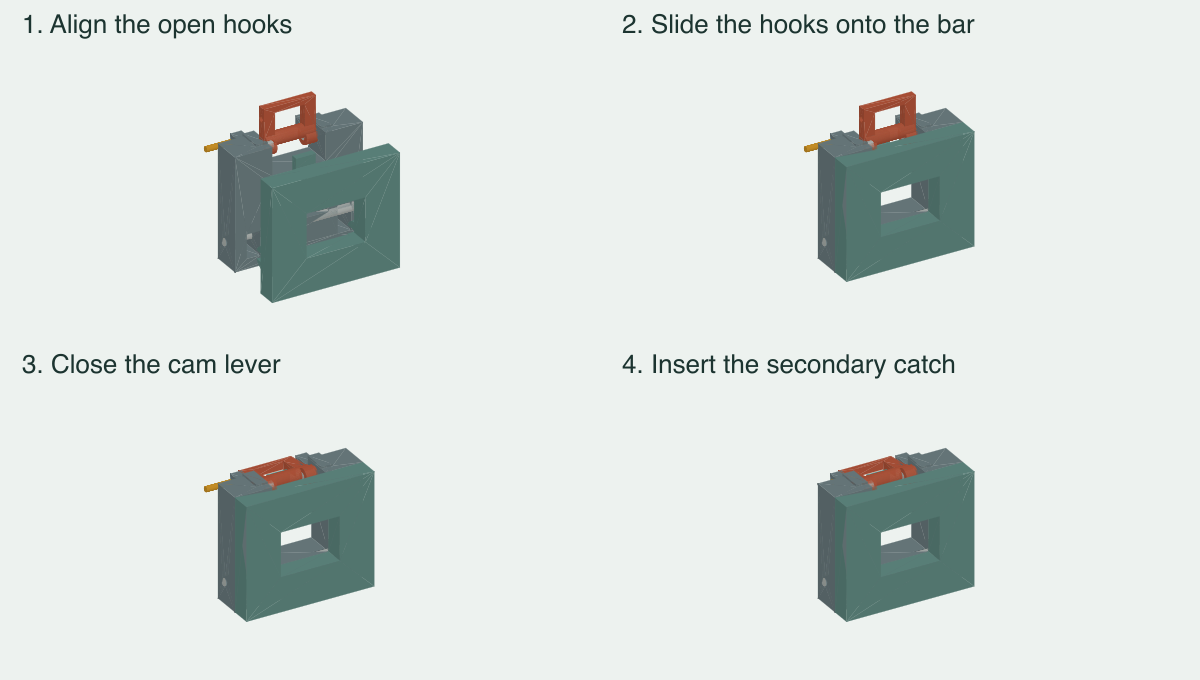
- With the lever open, seat both hooks over the bar. Close the lever and insert the independent catch. Look for full contact at the stops and a visible, deliberately releasable catch.
- Record insertion and release effort, seam gap, rocking and retention. Repeat on specimens after assembly cycles and a reviewed thermal and vibration exposure. Carry the selected profile and clearance to the installed interfaces.
Before you continue
Record catch engagement, insertion and withdrawal effort, seam gap, play and wear for each tested clearance.
Show reference images for this step
Dry-fit the nose and landing cradle
- Why this matters
- Module-local rails keep each release path clear while the aft hub takes the landing loads.
- Where to look
- Check each rail and shoe inside its own module. Trace the landing struts through the shell clearance ports into the cradle hub.
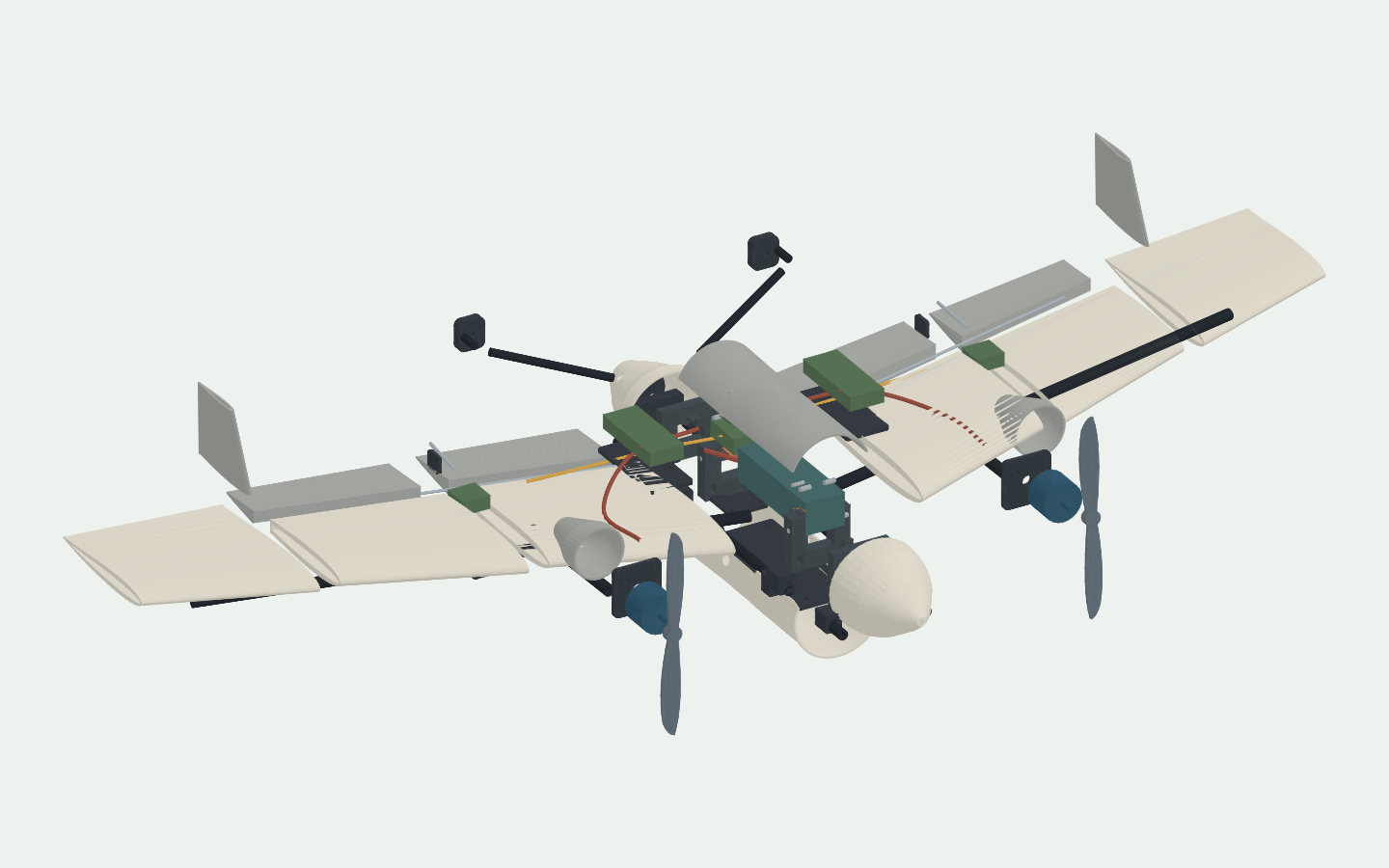
- Fit the inherited c25 hook bar, cam pivots and positive catch with the exact coupon before installing the interface. Compare actual insertion and release effort.
- Fit the nose, center and cradle rail stocks to their own module-local shoes. Dry-fit the revised aft bridge and hub with both mounting bolts and confirm no stock extends across either opening path.
- Check the relocated receiver envelope at X238 and Z18 mm before trying the aft cam. Restrain the actual harness clear of that sweep. Keep the shortened avionics deck ahead of the aft receiver and check the two Ø10.2 mm shell clearance ports around the Ø9 mm wing spars.
- Trial-fit each actual carbon strut into its angled landing-stock pocket. Check that the stock clears its cosmetic aft shell port so the hub carries the landing loads.
- Check the hatch removal route with the battery disconnected. Confirm the actual rail, fastener, bridge and hinge load path before physical commissioning.
Before you continue
Check both actual spar clearances, receiver clearance, rail retention and all four stock-to-hub interfaces.
Open the hatch and service both snap joints
- Why this matters
- The center hatch opens access to the catches, cams and detachable end modules.
- Where to look
- Select Installed joint service. The same raised-hatch setup applies to the nose and aft sequences.
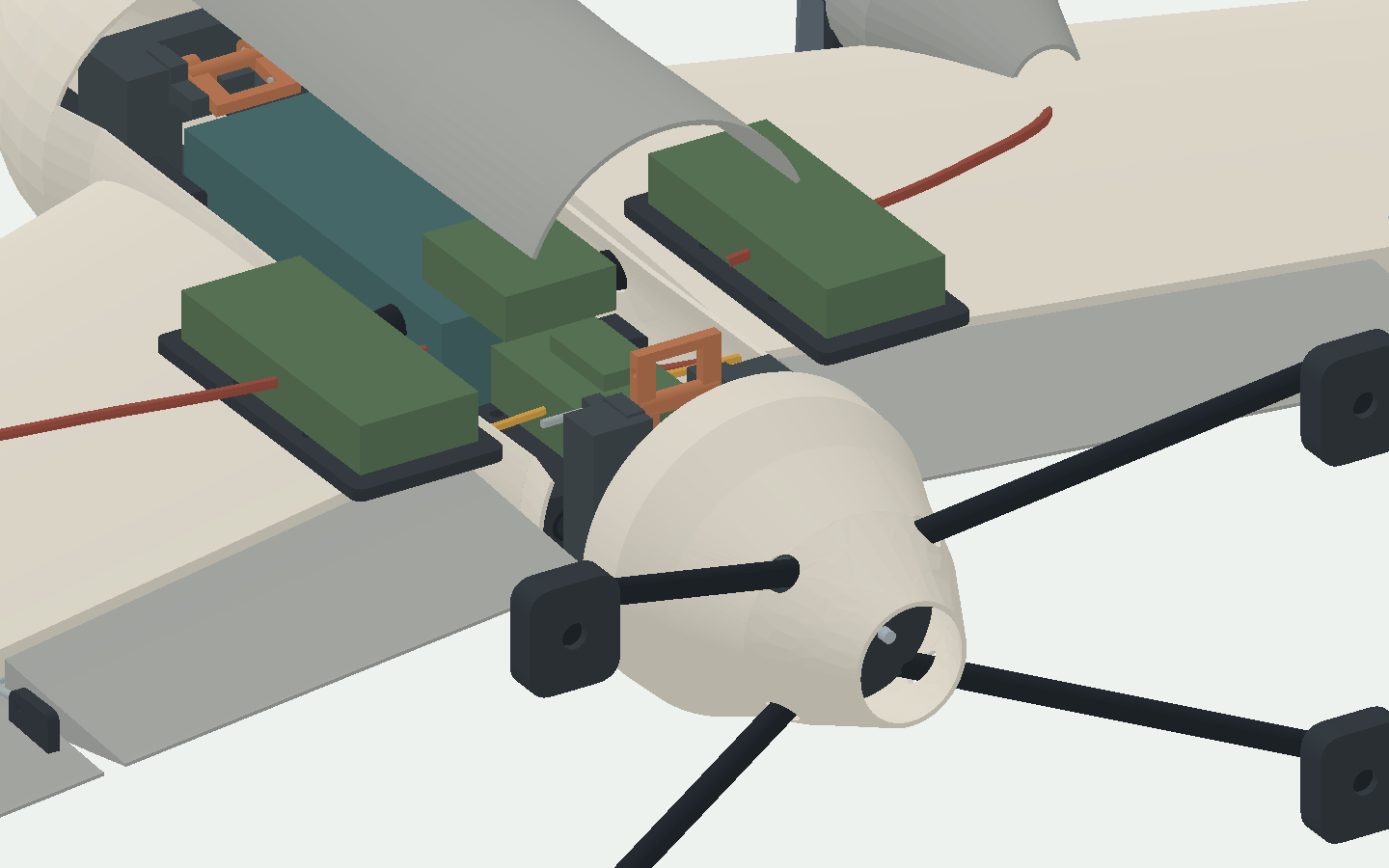
- Remove the propellers and isolate the battery. Lift the center service hatch along the nominal +Z CAD path to its 48 mm access pose. Disconnect and restrain any module leads that cross the interface before removing either catch.
- At the nose, withdraw the positive catch 11 mm sideways, open the cam through the modeled 98° range and withdraw the complete keyed nose assembly 18 mm along the forward axis. Stop at resistance. Keep its two rails in the nose.
- At the rear, withdraw the positive catch 11 mm, swing the cam 98° and withdraw the complete four-point landing cradle 18 mm along the aft axis. The aft bridge bolts and spacers stay with the cradle. Verify all four pad and strut attachments.
- Reassemble in reverse order. Seat the shoulders, confirm both hooks are engaged, close each cam and reinstall each independent catch before closing the hatch. Review wear, loaded play and landing loads before any powered trial.
Before you continue
Verify hook seating, catch retention and each module’s actual withdrawal path with the leads disconnected and secured.
Fit the wing panels and elevons
- Why this matters
- Matching wing alignment and retained elevons support predictable control response and landing clearance.
- Where to look
- Follow the main spar through the center shell and locate the servo leads behind the motor mounts.
- Dry-fit the nominal 9 mm outer diameter carbon main spar and the root restraints, then fit the port and starboard panels. Check matching twist and alignment and inspect each spar seat.
- Fit retained elevon hinges, horns and linkages. Check the full mechanism sweep in both aircraft orientations. Leave control throws and trim open for review.
- Confirm each elevon sits behind its motor disc and has clearance to the cradle and the work surface throughout the expected travel. Keep servo leads clear of hinges and seams.
Before you continue
Record wing alignment, hinge retention and free elevon travel with clearance to the cradle and work surface.
Install the motors and protected power harness
- Why this matters
- A secure installation keeps both tractor motor branches accessible and away from the latches and propeller discs.
- Where to look
- Use the motor plate mounting patterns, the separate ESC mounts and the central pack restraint.
- Fit both EMAX ECO II 2807 1700KV motors to measured 19 × 19 mm M3 mounting patterns. Confirm safe screw depth and secured wiring. Leave the propellers off.
- Fit both Hobbywing Skywalker 60A V2 ESCs with ventilation and strain relief. Connect three motor phase wires on each side. Depin and insulate both ESC BEC positive leads. Keep their signal grounds.
- Fit the Tattu 4S pack with a structural strap and axial restraint. Verify connector access, fuse and disconnect locations, and motor-branch current capacity before the first powered run.
Before you continue
Check screw depth, cooling, battery restraint and motor-branch protection with both propellers removed.
Mount the controller, receiver and sensors
- Why this matters
- The relocated receiver needs clearance to the aft cam while the controller and sensors remain accessible.
- Where to look
- Look above the shortened avionics deck and identify the aft receiver, wiring corridor and controller orientation.
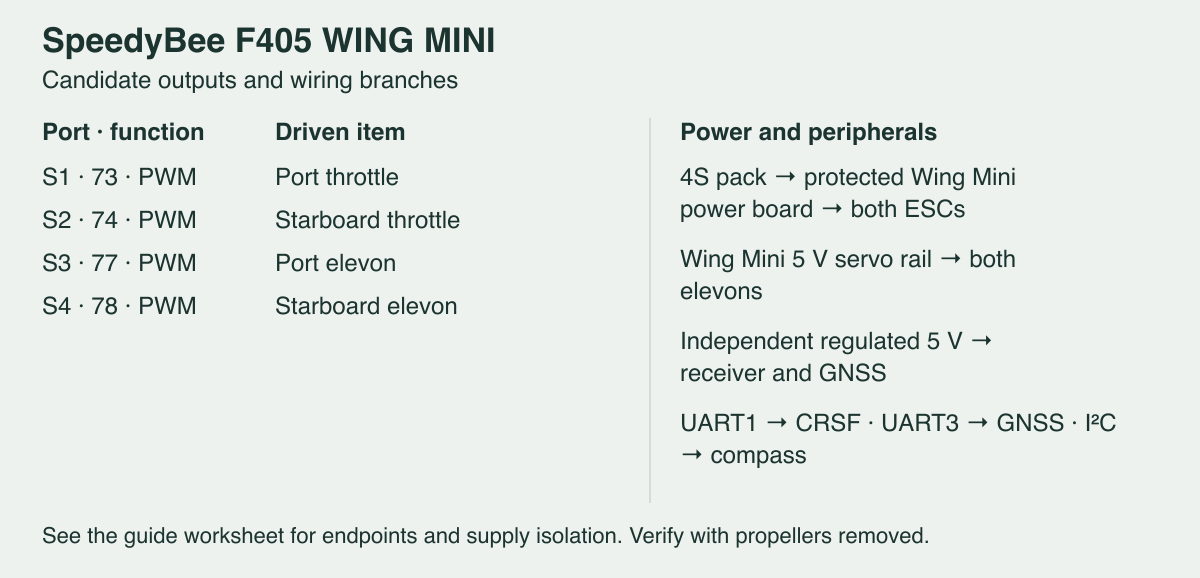
- Mount the SpeedyBee F405 Wing Mini in its forward-flight orientation. Route the USB and microSD access so that the nose can remain locked during checks.
- S1 Port throttle (PWM, function 73) · S2 Starboard throttle (PWM, function 74) · S3 Port elevon (PWM, function 77)
- S4 Starboard elevon (PWM, function 78)
- Use UART1 for CRSF and UART3 for GNSS, with the compass on I²C. Verify pin order, cross UART transmit and receive, and power both peripherals from the independent verified 5 V regulator with a common ground.
Before you continue
Verify terminal assignments, supply isolation, service access and actual harness clearance throughout the cam sweep.
Check radio and controls with the propellers removed
- Why this matters
- Control checks establish the correct outputs and loss-of-link behavior in the intended ground modes.
- Where to look
- Use the installed controller map for both ESC channels and both elevons, then verify the receiver connection.
- Check polarity, regulator isolation and loaded rail voltage using a current-limited source. Calibrate the controller and ESC endpoints using the exact firmware and component instructions.
- Verify left and right motor output, each motor's direction and both elevon correction directions in forward-flight and nose-up orientations. Check the linkages under load for binding, flex and voltage drop.
- Check throttle cut, receiver range, loss of link, arm/disarm behavior and the approved ground-mode setup. Record observed failsafe results and keep a parameter export with the bench notes.
Before you continue
Record measured rail voltage, control directions, throttle cut, range and failsafe with the propellers off.
Measure installed fit, mass and propulsion
- Why this matters
- A fit and balance record links any propulsion result to the exact built airframe and its landing cradle.
- Where to look
- Measure the complete article with its secured pack, both motors, control linkages, latches and four cradle feet installed.
- Record total assembled mass, actual battery position, hardware and profile IDs, mounted propeller clearance, fastener retention and the measured balance datum. Keep the allowable CG and throws open until reviewed.
- With a rated guarded fixture and remote cutoff, test one exact motor and 7042-2 propeller first. Review single-branch results before operating both motors together. Log thrust, current, voltage sag, RPM, temperature and movement.
- Use the lowest reviewed safe electrical limit and a provisional 25 A aggregate abort ceiling for the first controlled paired trial. Inspect latches, wiring and hardpoints after the run. Measure elevon control authority in the propeller airflow before requesting hover review.
Before you continue
Record actual mass, balance, current and retention. Review measured control behavior before planning hover.
Review the hover and transition gates
- Why this matters
- Nose-up and wing-borne tests need separate measured limits for the same configuration.
- Where to look
- Review touchdown stability, propeller and elevon clearance, and throttle behavior in the bench configuration.
- Review the exact measured mass, CG range, linkage loads, landing restraint and usable thrust margin. Verify actuator and sensor behavior with the actual power and firmware configuration.
- Treat Flightory Riflebird as a precedent for fixed thrust and elevons in the propeller airflow. Perch requires its own CG, thrust and transition evidence.
- A separate supervised test plan covers takeoff, nose-up hover, vertical landing and both directions of transition. Record limitations and abort behavior. Carry forward measured outcomes only for the documented configuration.
Before you continue
Use a separately reviewed plan for vertical takeoff, landing and both transition directions after completing the bench evidence.
Checks to record
- Measure the actual coupon fit, both cam and catch engagements, rail stock retention, hatch clearance, and repeated service cycles.
- Measure axle and bridge-bolt fits, static and touchdown load capability, four-foot level and nose-up stability.
- Confirm harness release and strain relief, propeller clearance, loaded elevon direction and travel, complete balance, range and failsafe.
- Record guarded power, hover, both transition directions and landing separately after the exact bench article passes review.